Benjamin Franklin, Champion of the Wealth Tax [View all]

Today on TAP: When public needs were great, he wrote, its claim on the ‘superfluous’ property of the rich was strong and just.
https://prospect.org/2026/07/03/benjamin-franklin-champion-of-the-wealth-tax/
 Credit: Kajdi Szabolcs/iStock
When we consider which of the nation’s Founding Fathers still provides wise counsel to us today, 250 years after they wrote and signed the Declaration of Independence, may I submit for your consideration one Benjamin Franklin, who argued that wealth taxes were both proper and necessary. Indeed, Franklin’s ideas about private property suggest he’d be writing and speaking in favor of the one-time wealth tax on California’s billionaires were he with us today. In December of 1783, shortly after he’d negotiated and signed the peace treaty with Britain in which Britain relinquished its claim to the 13 united states, Franklin wrote a
letter to his fellow Founding Father Robert Morris in which he assessed the rival claims of taxpayers to their property and the government’s power to tax or even expropriate it:
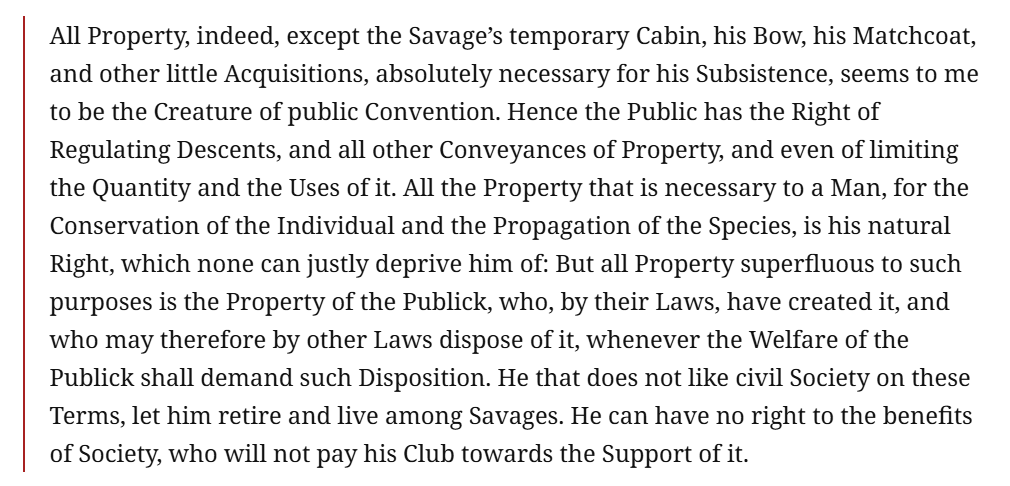
With multiple California hospitals reducing services and laying off staff due to the cuts in President Trump’s One Big Beautiful Bill, the “Welfare of the Publick” certainly appears to require a tax on “Property superfluous to such purposes” as “the Conservation of the Individual and the Propagation of the Species.” Whether the flight of billionaire Sergey Brin, the leading funder of the anti–wealth tax campaign, from California to Nevada constitutes “retir[ing] and liv[ing] among savages” I leave to keener minds than mine.
Franklin’s argument (which, please note, specifically favors inheritance taxes as well as wealth taxes) is of a piece with his broader radicalism: supporting the abolition of slavery; writing Pennsylvania’s 1776 state constitution, which, at a time when other states required substantial property ownership in order to have the right to vote, extended the franchise to all taxpaying men and their adult male children (whether those children were taxpayers or not). That constitution also established a unicameral legislature with one-year terms, and in lieu of creating the post of governor, established a 12-person executive council answerable to the legislature.
snip

 = new reply since forum marked as read