James Webb telescope spots strange 'super-puff' planet frantically chasing its own atmosphere through space
By Elizabeth Howell
published 13 minutes ago
New James Webb telescope observations of the 'super-puff' planet WASP-107b show that the exoplanet's runaway atmosphere is frantically escaping into space.
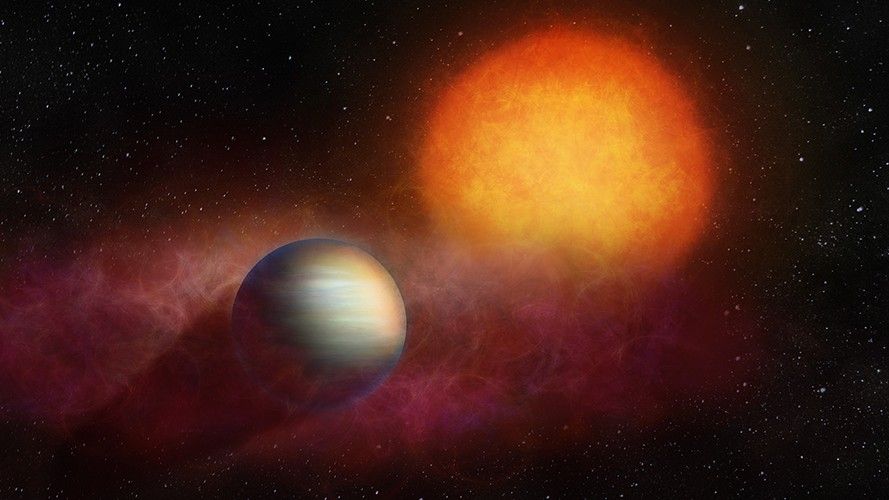
An illustration of exoplanet WASP-107b. The planet's escaping hydrogen atmosphere measures five time the radius of the planet itself, new JWST observations hint. (Image credit: University of Geneva/NCCR PlanetS/Thibaut Roger)
A "super-puff" exoplanet is leaking a lot of helium into space, new observations show — and may be in the process of losing a lot of its atmosphere.
A large plume of helium gas was spotted evaporating from the giant planet, known as WASP-107b, according to research based on observations from the James Webb Space Telescope (JWST).
The results, published Monday (Dec. 1) in the journal Nature Astronomy, show that the gas spanned an area nearly five times the diameter of the planet and that the gas was visible speeding far ahead of the planet along WASP-107b's orbital path.
The research represents the first time JWST has "captured helium escape from this planet," lead author Vigneshwaran Krishnamurthy, a postdoctoral researcher at McGill University's Trottier Space Institute in Montreal, said in a statement.
The discovery could help researchers better understand how exoplanet atmospheres behave, especially in extreme star systems like WASP-107, where WASP-107b resides, the team said.
More:
https://www.livescience.com/space/astronomy/james-webb-telescope-spots-strange-super-puff-planet-frantically-chasing-its-own-atmosphere-through-space
