Supreme Court to hear argument on law enforcement's use of "geofence warrants"
On Monday, the court will hear argument in a Fourth Amendment case addressing law enforcement use of "geofence warrants" to find out, using cellphone data, who was in the vicinity when a robbery took place.
— SCOTUSblog (@scotusblog.com) 2026-04-23T13:11:31.931Z
Case Preview
Court to hear argument on law enforcement’s use of “geofence warrants”
By Amy Howe
Apr 22, 2026
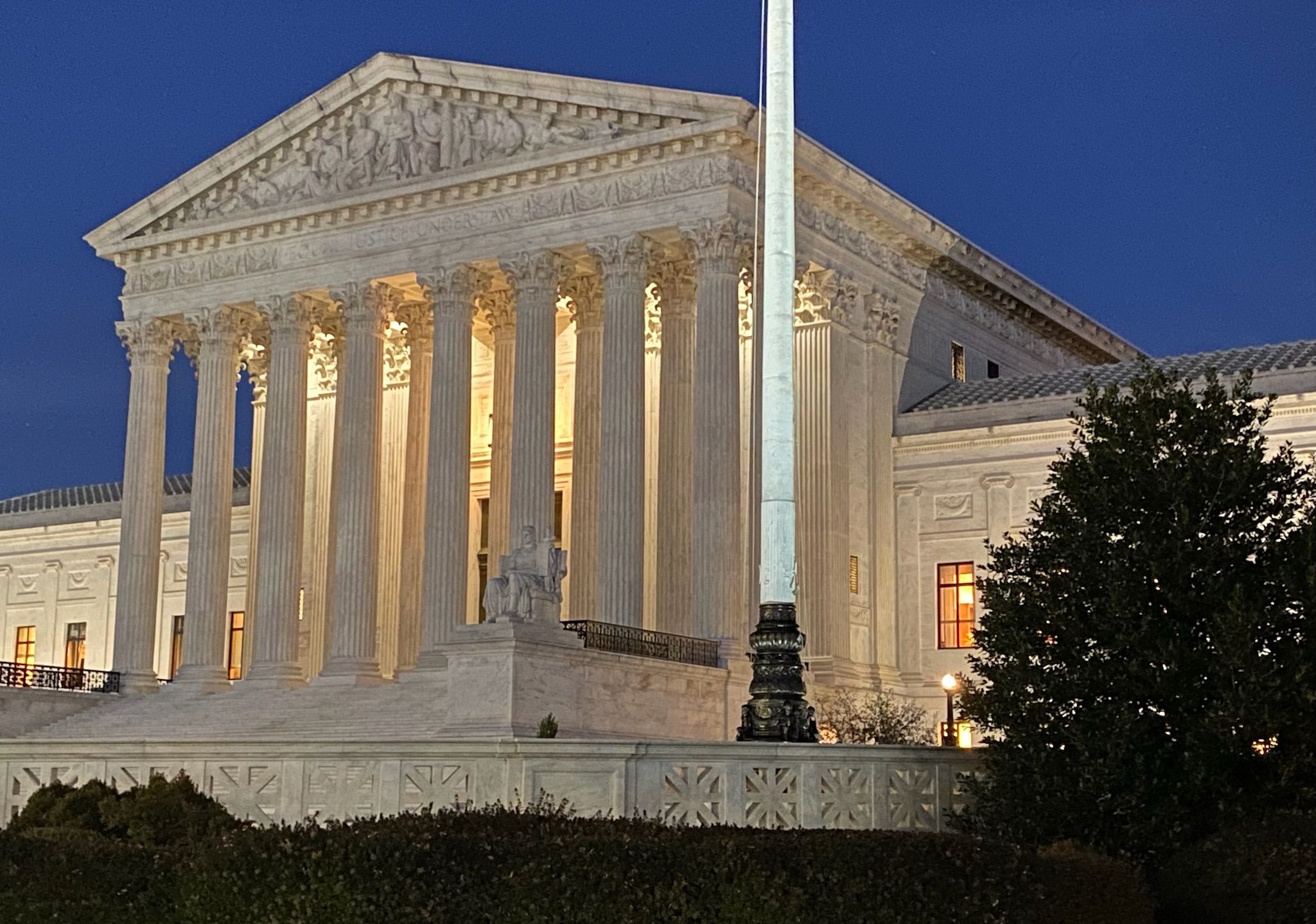
(Katie Barlow)
The Supreme Court will hear oral argument next week in
Chatrie v. United States, which concerns a Virginia man who was convicted of bank robbery. Okello Chatrie contended in the lower courts that the government violated the Fourth Amendment when it obtained his location from his cellphone records, which put him in the vicinity of the robbery. The lower courts rejected that argument, but now the justices will weigh in.
The case has its roots in a 2019 robbery of a federal credit union in Midlothian, Virginia, in the Richmond suburbs. Because the robber, who made off with $195,000, appeared to be speaking on his cellphone when he entered the bank, law enforcement officials served a “geofence warrant” on Google, which directed the tech company to provide location data for cellphone users who were near the bank at the time of the robbery.
The process of obtaining data from Google moved forward in three steps. The warrant initially created a “geofence” with a 150-meter radius around the bank for the 30 minutes before and after the robbery. Google gave law enforcement officials an initial list of accounts linked to devices that were in the area during that time period, although it did not provide the names of the users of those accounts. At the second step, based on the initial list, law enforcement officials asked Google for information about several accounts that were in the area during a two-hour period. And at the third step, a detective asked for, and received, the names and information for three accounts – one of which was the defendant, Chatrie. Law enforcement did not seek a warrant when conducting the latter two steps.
Based on the information that the government had obtained from Google, Chatrie was charged with (among other things) bank robbery. He asked a federal district court in Virginia to bar prosecutors from using evidence obtained as a result of the geofence warrant against him, arguing that it violated the Fourth Amendment. The district court agreed with Chatrie that the warrant in his case did not have the kind of probable cause that the Fourth Amendment requires, but it nonetheless allowed the government to use the evidence on the ground that law enforcement had acted in good faith.
{snip}
Amy Howe
Founder & Reporter
Amy Howe is the co-founder of SCOTUSblog and its primary reporter.
Recommended Citation: Amy Howe,
Court to hear argument on law enforcement’s use of “geofence warrants”, SCOTUSblog (Apr. 22, 2026, 12:00 PM),
https://www.scotusblog.com/2026/04/court-to-hear-argument-on-law-enforcements-use-of-geofence-warrants/
