The Next Phase of the Abortion Wars: Targeting Pills, Helpers and Patients
(AND THE MISOGYNIST, PATRIARCHAL, CHRISTOFASCIST, THEOCRATIC, WOMAN-HATING WAR ON WOMEN CONTINUES APACE)
(There is a very useful interactive map at the link below)
The Next Phase of the Abortion Wars: Targeting Pills, Helpers and Patients
PUBLISHED 2/12/2026 by Ava Slocum
Four years after Dobbs, state lawmakers are shifting from outright bans to a sweeping strategy of lawsuits, criminal penalties and cross-state battles aimed at cutting off the last remaining routes to abortion care.
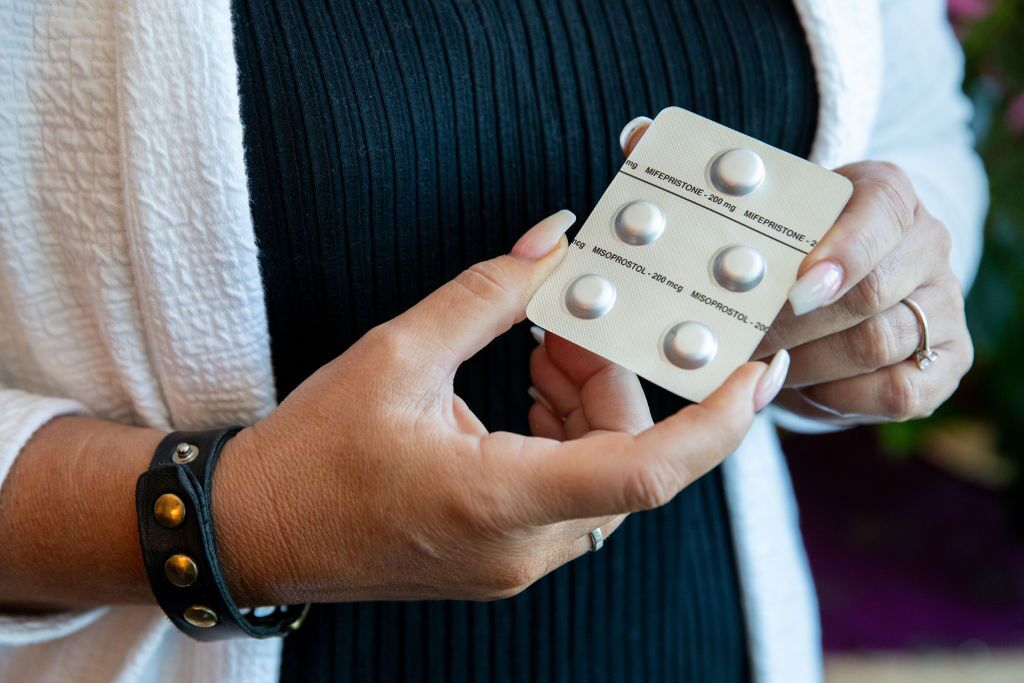
(Amanda Andrade-Rhoades / The Washington Post via Getty Images)
The first year of Trump’s second term marked major blows for reproductive healthcare. Medicaid funding cuts forced about 50 Planned Parenthood clinics to close throughout the U.S. and blocked 1.1 million Planned Parenthood patients on Medicaid from using their insurance to pay for reproductive healthcare. Twenty-three independent abortion clinics throughout the country also shut down in 2025, according to Abortion Care Network’s annual report. 2025 also saw some new, troubling trends in state-level reproductive healthcare policies, including restrictions on medication abortion and shield laws and criminalization for people who help patients access abortions.
“Prior to [2025], much of the focus was on straightforwardly banning and restricting access to abortion care,” said Kimya Forouzan, principal state policy advisor at the Guttmacher Institute, at a webinar outlining Guttmacher’s policy analysis about 2025’s state policy trends for reproductive healthcare access. “In response, patients, providers and helpers showed incredible resiliency in finding ways to ensure that abortion care is still available for many people.” Forouzan continued: “Now, state legislators are increasingly going after these avenues of care and pushing forth criminalization of care.”
Currently, 13 states have total abortion bans in effect. Another 28 have bans based on gestational duration (including states such as Florida and Georgia, which cap abortion at six weeks, before most women even know they’re pregnant).Now, at the start of 2026, there are only nine states where it is possible to get a legal abortion with no restrictions. In 2025, Guttmacher tracked 841 legal provisions introduced throughout the U.S. that would restrict access to sexual and reproductive healthcare. Of these, 70 were enacted—many attacking abortion pills and other channels for abortion access that have managed to survive post-Roe v. Wade. Now, four years after the Supreme Court’s Dobbs decision overturned Roe, here are some of the key ways states are pushing harder than ever to end any access to abortion.
. . . . . .
Still, pro-abortion lawmakers are gearing up for another year’s worth of fights against antiabortion laws and the GOP’s tactics to take away women’s access to reproductive healthcare. “All in all, 2025 state legislative sessions demonstrated a vital point,” Forouzan said. “Attacks on abortion access and all forms of sexual and reproductive health and rights have in no way settled. State lawmakers continue to push forth legislation that seeks to limit the remaining avenues of care as well as criminalization.”
https://msmagazine.com/2026/02/12/abortion-bans-pills-state-shield-laws-fetal-personhood/
