Welcome to DU!
The truly grassroots left-of-center political community where regular people, not algorithms, drive the discussions and set the standards.
Join the community:
Create a free account
Support DU (and get rid of ads!):
Become a Star Member
Latest Breaking News
Editorials & Other Articles
General Discussion
The DU Lounge
All Forums
Issue Forums
Culture Forums
Alliance Forums
Region Forums
Support Forums
Help & Search
General Discussion
Related: Editorials & Other Articles, Issue Forums, Alliance Forums, Region Forums
What is civil society, and why should we care?
Ernest Gellner on the conditions of liberty.https://www.programmablemutter.com/p/what-is-civil-society-and-why-should
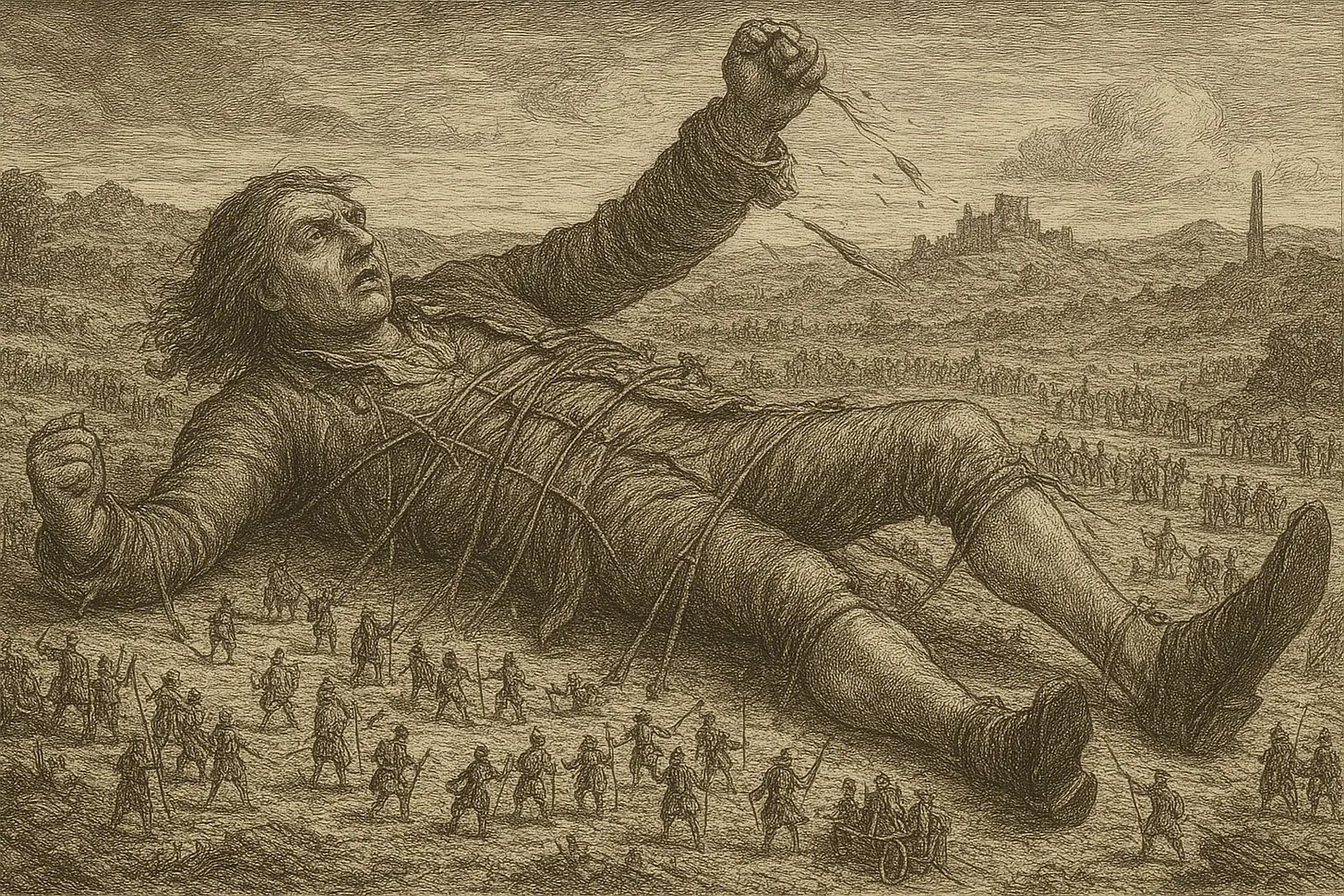
There are many possible stories about why American political conservatism is such an intellectual trainwreck. Here’s one. Conservatives used at least nominally to argue that it was important to protect civil society from the depredations of government, and many genuinely believed it. Some still do, but now, the dominant figures in political conservatism want to use government to weaponize and suborn civil society. Like all simplified fables, this gets a fair amount wrong, both in its understanding of what happened and in what it leaves out. Still, it isn’t a bad way to start understanding some of what is taking place. Yet it begs an important question. What is civil society?
When I wrote about how civil society could beat Trumpism a couple of weeks ago, I felt a mild sensation of intellectual guilt - I knew I was invoking a complicated set of ideas without properly explaining them. So here’s my attempt to make up for that, and to explain why we ought want to protect civil society too, leaning on the account in Ernest Gellner’s book, Conditions of Liberty. I suspect that few people younger than 50 have read this book - it’s been out of print for thirty years or so. Gellner wrote it back in the 1990s, when civil society seemed to promise a path forward for the newly freed democracies of Eastern Europe. Now people are rediscovering the idea, not because of future hopes, but because they want to explain what is going wrong as the state escapes its restraints and threatens to crush the people’s liberties.
Gellner’s understanding of civil society is both relevant and a possible bridge between certain parts of the left and right. While he identified loosely with the left, Gellner was profoundly influenced by the kinds of classical liberalism articulated by Adam Ferguson and David Hume. They, in turn, wrote in the aftermath of the English Civil War and Glorious Revolution of the previous century, when Scottish and English society had been torn apart by vicious religious controversies. Gellner’s account of civil society, like those of his intellectual forebears, begins from the fact of profound disagreement and asks how best to manage it. From Gellner’s perspective, civil society is a marvelous accident, an unanticipated by-product of the seventeenth century stalemate between Calvinist enthusiasts (here and below, the term ‘enthusiast’ refers to Protestants who believe that God lives inside them, and are accordingly uncomfortable with certain kinds of hierarchy) and the English state.
Yet this accident has shaped the world that we live in, creating a realm of autonomy in which people are free to live their lives in many different ways, within broad structures that support a reasonable degree of peace and shared order. The dominant strain in American political conservatism has abandoned any commitments that it once had to this vision of pluralism. Some conservatives favor a shared notion of the common good, which ought be imposed as necessary on society. Others are more straightforwardly interested in domination and plunder. Neither faction has any interest in preserving the autonomy of civil society. Instead of a pluralistic realm to be protected or left alone, they see a “cathedral” of left ideology and argue that universities, non-profits, even multinational corporations are redoubts of the enemy that must be taken by storm. This is dingbat Gramscianism, strained through the turd-encrusted sieve of Curtis Yarvin Thought.
******
snip